
Rusalka
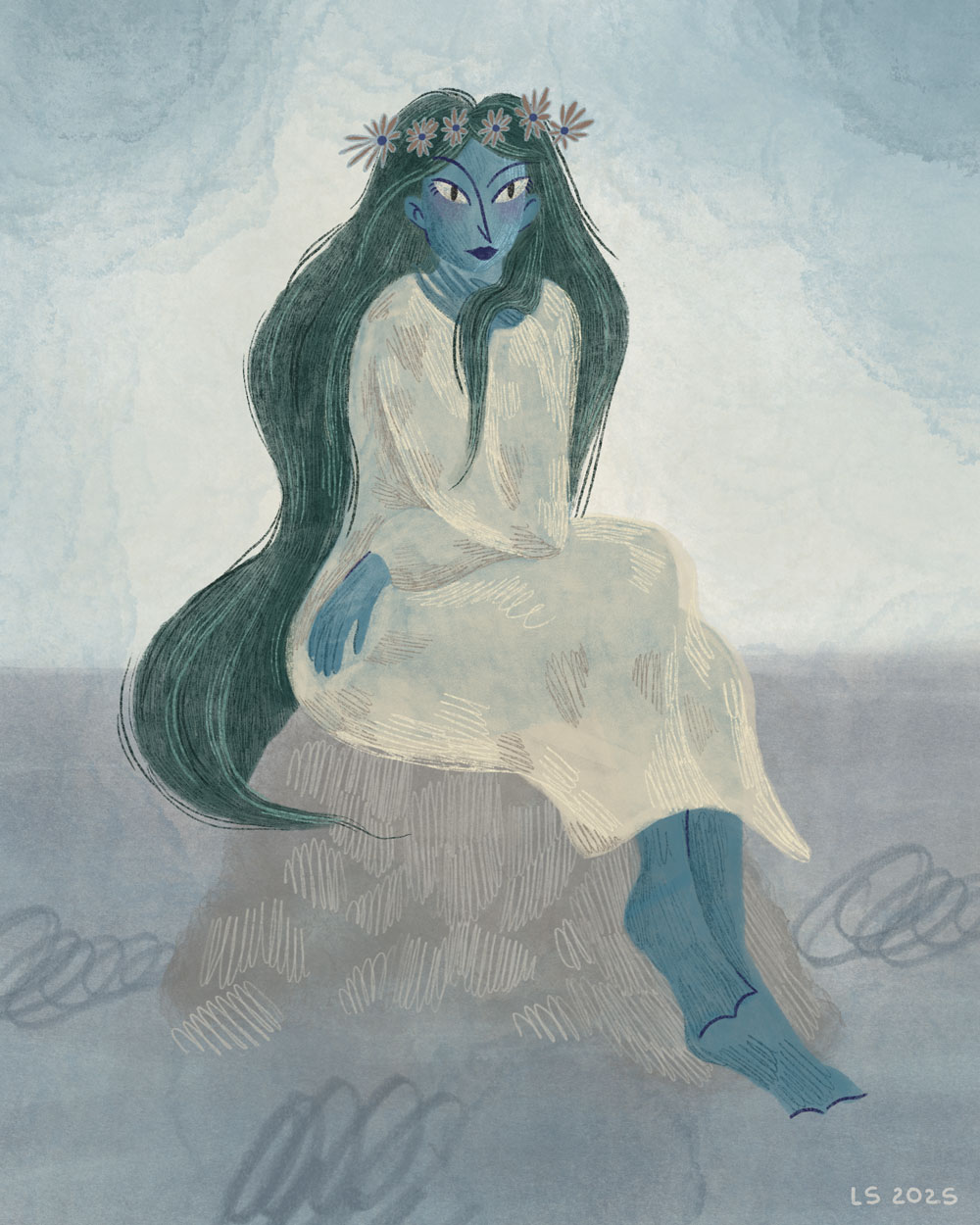
Rusalkas are water spirits formed from drowned women or girls. Only females can become rusalkas; males who drown, on the other hand, become mamuks.
The name rusalka may come from several sources. Some believe it derives from ruslo — the riverbed or stream where rusalkas live — or rusyavyi (light brown or blond), since they are often depicted with light brown hair. Others suggest the name has roots in Latin.

Rusalka’s Description
Rusalkas have long green hair that can reach their knees. They typically have blue or pale blue skin, black or green eyes, and long eyelashes. They often appear naked or dressed in long white sorochka shirts. Otherwise, they look human, with arms, bodies, and legs — but they have webbing between their toes, like ducks.
Once the souls of drowned women become water spirits, they gain eternal youth and enchanting beauty. They forget their past lives completely, and even the oldest appear youthful and beautiful.
Rusalkas take great care of their hair, spending long hours combing it — an act that, according to legend, can bring rain, floods, or other misfortunes. At other times, feeling playful, they may transform into different water creatures, such as frogs.
Rusalkas call themselves daughters of the water spirit and obey him in everything. Like the water spirit vodianyk, they sleep deeply during the winter months. They awaken in spring when the ice melts, birds return, and the sun warms the earth again. At that time, rusalkas come ashore. They swing from tree branches, comb their long hair, sing, and dance in circles.
These water spirits also guard fertility. They protect fields from floods and drought, bring nourishing rains, and sometimes cause mischief. People say a rusalka can tickle someone to death or trouble fishermen by twisting their nets or even capsizing their boats.
What Do Rusalkas Do?
There are two types of rusalkas: field rusalkas and water rusalkas.
- Field rusalkas help with the fertility of the land. They can bring rain to save crops during droughts.
- Water rusalkas sing to lure people into rivers and play tricks by tangling fishermen’s nets. They are playful and often swing on tree branches while singing. During Navske Week, if someone calls out to a rusalka or approaches water, they might be tickled to death — adding to the rusalkas’ numbers.
How to Protect Yourself?
There are several protective methods:
- Girls should wear wormwood or lovage visibly near a necklace or cross.
- Boys should carry garlic in their pockets.
- If someone has no protective charms, they must correctly answer one of three questions asked by a rusalka — then she will leave them alone.

Customs
During Navske Week, people bake special bread and decorate pysanky. The bread is broken into pieces and scattered in the fields to appease the rusalkas. In some regions, people would set the table for lunch and then leave the house, believing the offering would ensure a good harvest and keep rusalkas from causing harm.
On the night of Navske Easter, before the first rays of sunlight appeared, a special custom was observed in some villages. People would hang plain white shirts without embroidery, ribbons, or clean cloth on fences or tree branches. This ritual was especially common in households that had experienced a death during the year. The shirt symbolised clothing for a wandering soul — an invitation for those spirits seeking a physical form to return to the world of the living. If, by morning, one of the shirts had disappeared, people took it as a good sign: it meant a restless soul had found a new beginning.