
Chugaister
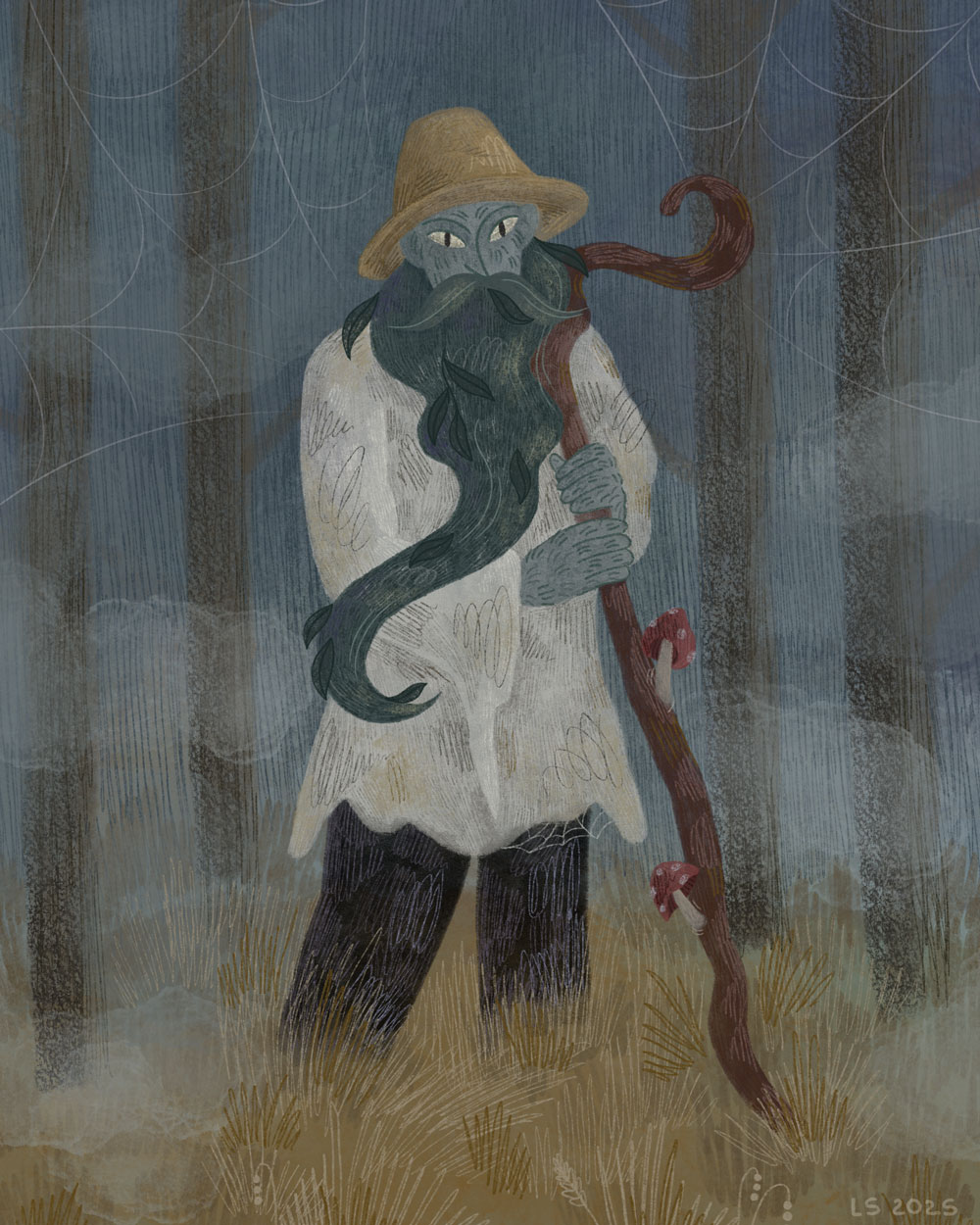
Known by many names:
- chugaistyr
- chugaistrin
- ochugaister
- chugai
- didko
- forest man
- forest grandfather or simply grandfather (in Boykivshchyna)
- nochnyk (Zakarpattia)
- hay (Rakhivshchyna)
Interestingly, the use of names like “grandfather” is probably related to the taboo of pronouncing the names of demons aloud, so as not to accidentally summon them.
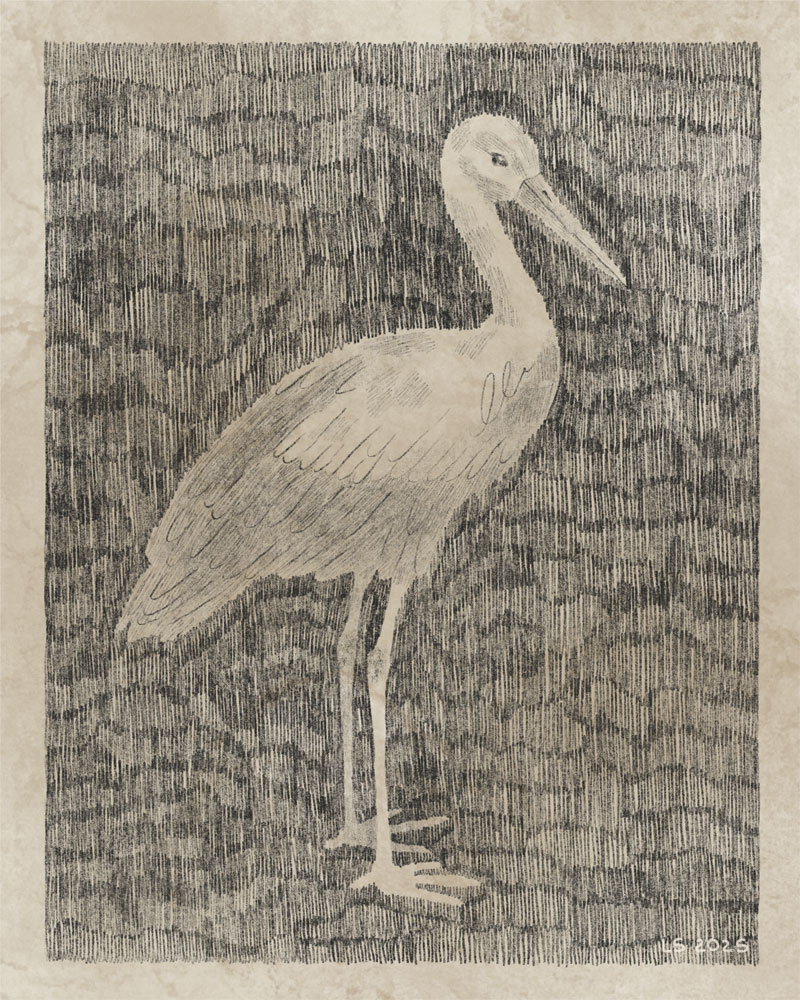
Modern researchers explain the etymology of the word as follows: chuta (chuganeia) is a traditional woven upper garment of the Hutsuls, made of fabric that looks like a large sheepskin with long wool. Women wear white chutas, men wear black ones. In folk tales, chugaisters are either black or white. The Hutsuls also call storks “haisters.” Thus, the chugaister is a kind of combination of a sacred bird and a half-beast, half-human creature.
The image of the Chugaister is most widespread in the Carpathians. region, especially in Hutsulshchyna. Interestingly, this mythological creature is not known to other Slavic people. The most written about this magical creature was by Mykhailo Kotsiubynsky in his work Shadows of Forgotten Ancestors.
Physical Description of Chugaister
Chugaister is a tall old man. Some legends say he can be up to 7 meters tall (taller than a spruce), so he can be seen above the treetops. He has a very long beard and a body fully covered with thick fur. He is very old, so he has no teeth and therefore speaks with a hiss. Over many years his clothing has worn out, so he has very ragged clothes or sometimes walks completely naked. On his feet he has claws or even hooves.
Habitat and Nature
He lives in dense forests because he is quite large. He dislikes fields and villages, as these are open spaces, but sometimes he can appear as a whirlwind of dust or wind. Therefore, it is wise not to make noise in the forest because he will hear you, and trouble may come in the form of a powerful wind or a wild beast.
The old man has his own domain and takes care of all the forest animals. He herds them three times a week: on Monday, Tuesday, and Thursday. He does this not just for himself — the animals help him too, for example by bringing water, food, and branches.
Chugaister’s Habits
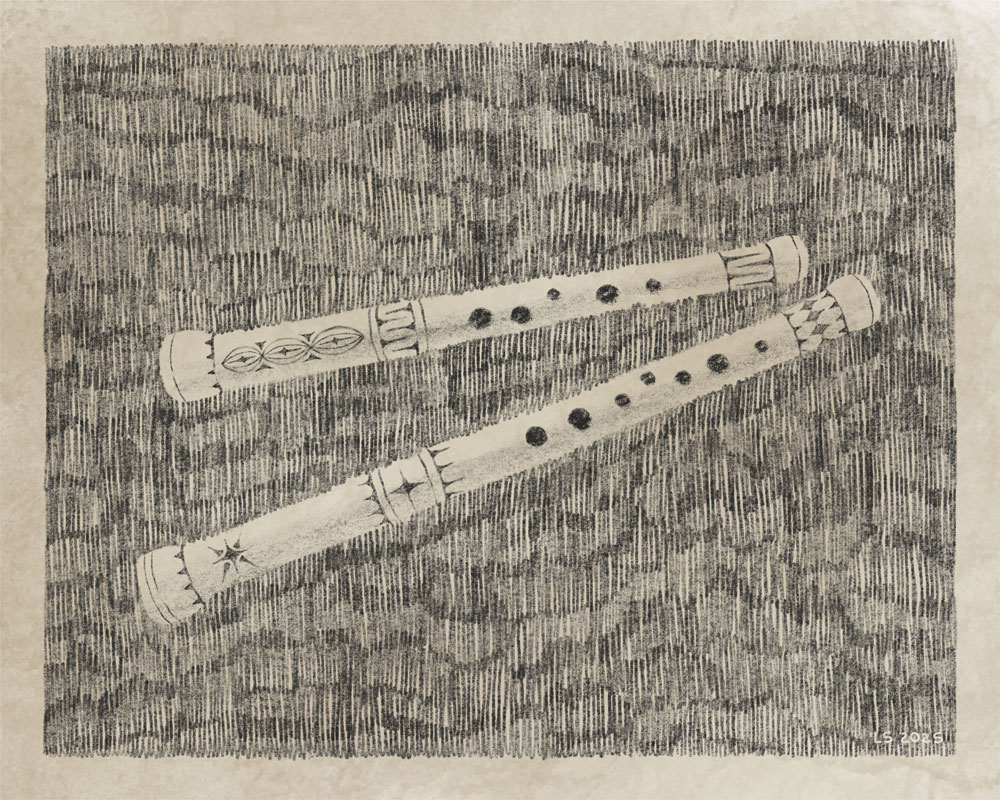
Chugaister loves to play his musical instrument — the sopilka. There are legends that if you hear music in the forest, he will warmly start his song, and whether you want it or not, you will begin to dance, and you will keep dancing until you wear out all your shoes. But if you endure this difficult dance, a reward awaits you.
He also enjoys other entertainments like singing and dancing. It’s no surprise that he is often seen near the campfire, playing his sopilka. It was believed that Chugaister hunts dangerous female spirits harmful to people — mavkas or povitruls — and eats them. More precisely, he cooks them over his famous bonfires.
Legends with Chugaister
There are legends that there is only one forest man, or that seven brothers became chugaisters, or that there are only three or four chugaisters in total. There is also a legend that once Chugaister was an ordinary man, but one day he greatly harmed his neighbor, who cursed him to live in the forest for eternity and be unable to die. Under the power of this curse, he was forced to leave his home and go deep into the dense forests. No one — neither human nor beast — can harm him. And so he has wandered the forests for years, his beard growing long and his clothes nearly worn out.
Relationship with People
Lumberjacks respect Chugaister and always leave him a portion of food when they go to work or cook something in their huts. In the evening, they rejoice if the dishes are empty, meaning Chugaister came and ate, so the house is safe, and no mavka or povitrulia will dwell there.
Shepherds also leave treats for Chugaister, such as banosh, kulesha, or milk, remembering that he is toothless.